Execute
Executable process
Turn roles, activities, entry and exit conditions, and quality gates into an operational project structure.
Solution · Human-AI Project Execution Platform
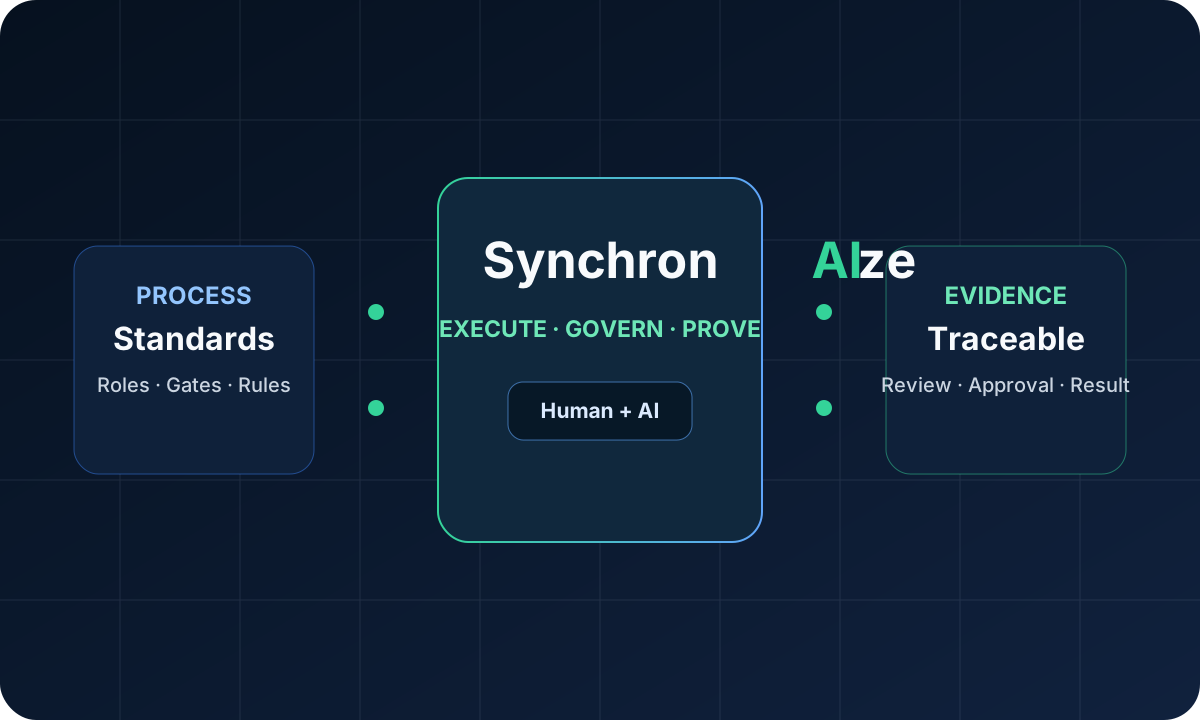
Overview
Execute · Govern · Prove
Execute
Turn roles, activities, entry and exit conditions, and quality gates into an operational project structure.
Govern
Set AI scope and human intervention by work risk, and stop progression when a required review or approval is missing.
Prove
Connect actual execution, versions, reviews, approvals, and quality results to support audit readiness and evidence preparation.
How It Works
Structure standards and organizational procedures as roles, activities, required information, and completion conditions.
Bind people, agents, skills, existing tools, autonomy levels, and quality criteria to each activity.
Manage task readiness and human intervention from inputs, completion conditions, quality gates, and approval state.
Connect execution events, artifact versions, reviews, approvals, and quality results as traceable evidence candidates.
Trust & Boundaries
Prepare reviewable drafts, run approved analysis and test tools, organize results, and identify traceability or consistency gaps.
Own process tailoring, safety and risk decisions, exceptions, official artifacts, baselines, releases, capability decisions, and assessor communication.
Do not present unexecuted tests or unperformed reviews as evidence. Preserve source, versions, execution time, tool context, and approval state.
Pilot
Begin with requirements and traceability, code and unit tests, or actual verification automation where evidence can be checked
Keep current ALM, version control, CI/CD, and verification tools and connect only what the pilot needs
Agree improvement goals from measured execution time, rework, traceability, and evidence completeness rather than promising fixed gains
SynchronAIze supports audit readiness and evidence preparation; it does not guarantee A-SPICE compliance, capability level, functional-safety judgment, assessment, or certification
FAQ
No. We review the ALM, issue tracking, version control, CI/CD, and verification tools already in use, then connect only the capabilities needed for the selected workflow.
No. It supports checking actual execution history, project rules, audit readiness, and evidence preparation. Final capability decisions require the formal assessment method and judgment by authorized personnel and assessors.
No. It remains a reviewable draft until an accountable person checks facts, consistency, traceability, safety, and project context, makes corrections, approves it, and places it under configuration control.
It is designed to connect multiple standards, but adoption starts with a clearly scoped activity. Standards such as ISO 26262 or ISO 21434 are connected only after project requirements and responsibility boundaries are defined.
Start with a small workflow whose inputs, completion conditions, and human review criteria are explicit, such as requirements and traceability, code and unit tests, or actual verification automation.